India has the talent but lacks the plan to train athletes long-term.
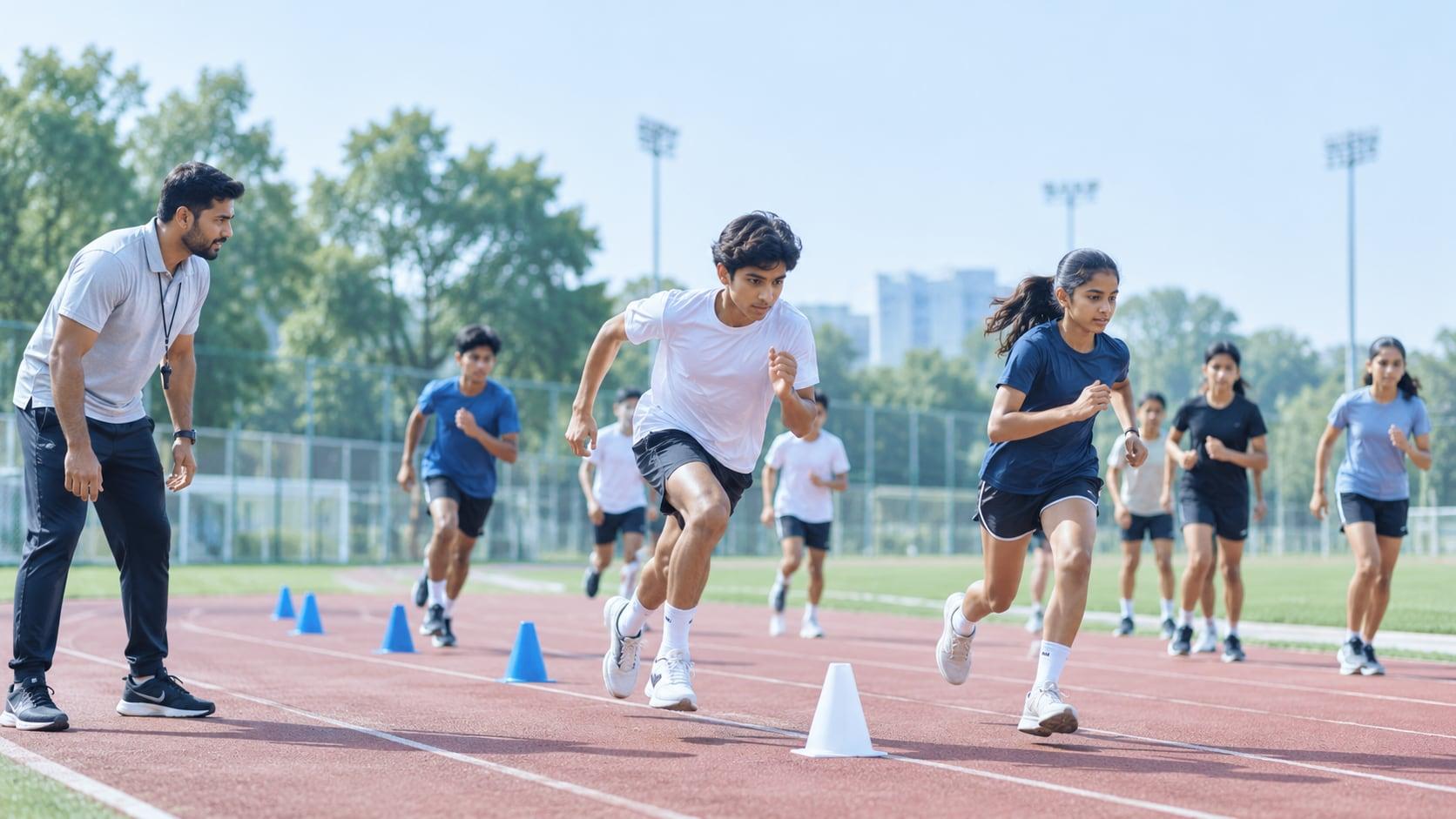
India has never lacked talent. One can consistently see raw potential everywhere, whether on a school playground or district tournaments. Yet many athletes who dominate at the school level disappear before they reach senior competition.
The problem is a lack of development planning and a structured system to nurture talent patiently and scientifically over time.
Why the problem has not been ambition
There is an ambition to win but it dies prematurely when an athlete wins at the under-14 level. There is immense pressure initially when a 10-year-old is trained like a mini professional and a 14-year-old is pressured to make it big.
Growth plate stress injuries and overuse injuries increase when young athletes are pushed into high-volume, sport-specific training before their bodies are ready. The child can also become mentally fatigued. The body has windows in which certain types of training produce the best results. When those windows are missed in favour of the repetitive patterns of one sport, physical qualities become harder to develop later.
Research backs this up. A study of more than 1,000 young athletes aged 7 to 18, published in the American Journal of Sports Medicine in 2015, found that more specialised athletes were more likely to be injured. Those who trained more hours a week than their age in years had about twice the odds of a serious overuse injury. Those who spent more than twice as many hours in organised sport as in free play also had higher odds.
What does long-term athlete development look like?
Long-Term Athlete Development (LTAD) is a stage-based model that aligns training with an athlete's growth and biological development. This model asks the question how to build an athlete for the next 10 to 15 years.
- Ages 6 to 9: Active Start and FUNdamentals. The priority is movement like jumping, running, throwing, catching and balancing. Early multi-sport exposure improves coordination and reduces injury risk.
- Ages 9 to 12: Learn to train. The most important window for fundamental motor skills. The nervous system is highly receptive and technical skills learned now become deeply embedded.
- Ages 12 to 16: Train to train. Strength, endurance and sport-specific skills begin in earnest, but must be managed carefully. Bones lengthen faster than muscles and tendons adapt, so loads that suit an adult can cause serious overuse injuries in a 13-year-old.
- Ages 16 and beyond: Train to compete and win. Athletes who have developed patiently are ready for higher training volumes, competition preparation and sport-specific intensity.
What if my child is pressurised to show results now?
The pressure to see quick success is understandable. Parents invest time, money and genuine care. But, the most important thing a parent can do for a young athlete is resist the pressure to speed training to see results. A child who enjoys sport today is more likely to become a high-performing athlete tomorrow. A child who is burned out at 15 may never find out what they could have become.
If you are a coach, remember that becoming a resilient senior athlete matters more than an early medal. A coach's reputation is not built on junior medals but on how many of those juniors are still competing at 25. In practice that means:
- Design training around the child’s developmental stage.
- Prioritise skill quality over training volume in the early years
- Introduce sport-specific intensity gradually
- Proactively monitor for signs of overuse injury and fatigue
The goal is to have athletes who are still competing at 25
In the LTAD framework sports medicine is a proactive part of development. If you are a parent or coach supporting a young athlete, movement screening at the right stages identifies weaknesses before they become injuries, guidance on strength and conditioning keeps loading appropriate for the stage they’re in and if they’ve experienced injury, return-to-sport protocols can bring athletes back without rushing.
At Ortho-One, our sports medicine team works with young athletes, coaches and parents. We conduct movement screening assessments, manage overuse injuries and provide rehabilitation that respects where an athlete is in their development. We have seen what happens when development is rushed, and what is possible when it is done right.
Key takeaways
- Poor development planning causes many school-level champions to disappear before senior competition.
- Early specialisation raises the risk of growth plate and overuse injuries, and of burnout.
- LTAD matches training to the athlete's stage of growth.
- Parents can help the most by resisting the pressure to accelerate.
- Sports medicine can be useful in both development and injury treatment.
- A simple guide to help you young athletes is to have weekly hours of organised sport that does not exceed the child's age in years.
Frequently asked questions
At what age should a child start specialising in one sport?
A young athlete should begin specialisation after age 12 to 13 to decrease the risk of injury and increase long-term potential. Participating in multiple sports through the early teenage years produces better outcomes and late specialisers often overtake early specialists by their mid-twenties.
What are the warning signs that a young athlete is being overtrained?
Young athletes who are overtrained show persistent fatigue that does not improve with rest, recurring injuries in the same area, declining performance despite continued training, loss of motivation, sleep disruption and mood changes. A medical assessment is needed if several of these symptoms are present at the same time.
How does LTAD reduce sports injuries in young athletes?
The LTAD model matches training loads to the athlete's physical readiness at each stage, which reduces stress on immature bones, tendons and joints. It also builds the neuromuscular strength and movement quality that protect the athlete at higher training intensities later on.
Can the LTAD model work in India?
Its core principles can be applied anywhere in the world. But, it needs to account for India's climate, nutrition patterns, school and competition calendars and the financial realities that shape many young athletes' access to coaching and facilities.
Is your young athlete showing signs of overtraining or recurring injuries?
At Ortho-One Orthopaedic Speciality Centre we support young athletes with movement screening, injury prevention assessments and sports medicine guidance that fits their stage of development.
Sources
- Jayanthi NA, LaBella CR, Fischer D, Pasulka J, Dugas LR. Sports-specialized intensive training and the risk of injury in young athletes: a clinical case-control study. American Journal of Sports Medicine. 2015;43(4):794-801. https://journals.sagepub.com/doi/10.1177/0363546514567298