Fifteen ankle injuries in five days
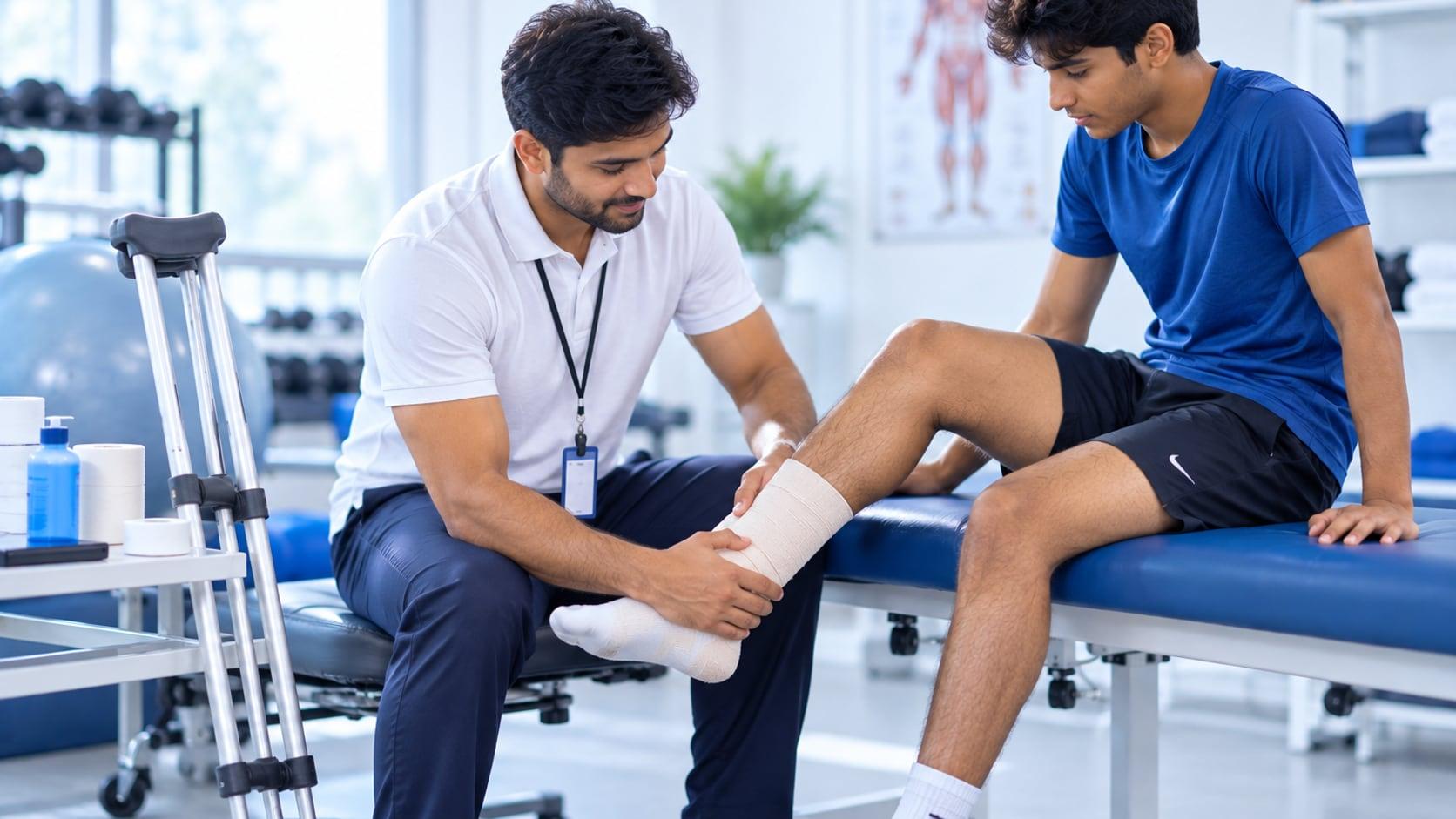
I was the tournament physician at the Chief Minister’s Trophy that was conducted at Coimbatore's VOC stadium in October 2025. We had over 900 players competing across five days. That week, I witnessed and treated 35-40 injuries, of which 15 were ankle injuries. These state-level athletes were in peak condition, so why were their ankles failing them? Most of the injuries happened while landing from jumps in high-intensity, close games. The injury rates spiked when the score was tight. The issue was whether these athletes had trained to handle fatigue, high pressure and end-game intensity.
Why playing through pain is understandable but can be costly
Some of the players who were in pain did not want to stop. The coaches too wanted their best players on the court. That competitive, play-through-the-pain mentality is essential for performance, but sports psychology research links it to higher injury risk.
What I kept telling coaches during the matches was: the best way to keep your star player on the court is not pushing them through injury but making sure that the injury never occurs in the first place.
The cost of getting it wrong is high and costs more than the loss of a game. Ankle injuries account for 40 to 45% of all basketball-related injuries globally. An inadequately rehabilitated ankle injury often leads to chronic instability, which can affect an athlete's movement, performance and career for years.
If the player has had a previous ankle injury it can often be the biggest warning sign. A study of Australian basketball players in the British Journal of Sports Medicine (2001) recorded 3.85 ankle injuries per 1,000 participations. Players with a previous ankle injury were almost five times more likely to injure the ankle again, and 45% of the injuries happened while landing.
Four ways to prevent ankle injuries
Ankle injury rates can be reduced by 35 to 50% through neuromuscular training programmes when implemented consistently. You don't need expensive equipment or a fancy facility but commitment and proper guidance.
A systematic review in Medicine and Science in Sports and Exercise (2010) found that programmes combining several types of neuromuscular training halved the risk of ankle sprains, and balance training alone cut it by about a third.
- Strength training. Strength training the lower limb was non-negotiable.
- Neuromuscular training. Balance, proprioception and joint control exercises train the ankle to stabilise under dynamic load.
Show what a neuromuscular training is
- Movement skills training. Landing mechanics, cutting technique and deceleration need to be trained.
- Basketball-specific conditioning. Training in fatigued, high-pressure scenarios prepares the body for end-game situations. If you only train fresh, you will only be safe when you are fresh.
Images needed
Strength training is essential in the pre-season up until the competitive period. It should not be tapered off when the tournament approaches.
Does this really work?
The tournament's top four teams had structured warm-up routines before every match: dynamic stretches, muscle activation, resistance band work, mobility drills and sport-specific movements. And they had proper cool down protocols after the matches.
Three of those four teams recorded zero injuries across the five days apart from unavoidable player contact. Those three teams trained consistently with strength and conditioning programmes, with coaches carefully managing training loads. The fourth team discontinued strength training two months before the tournament and had to deal with multiple flare-ups of pre-existing problems.
Get a picture of a sprain diagrammatic or in video format that can be featured here
The goal is to prevent injuries and maximise performance
Teams that prioritise neuromuscular training, strength conditioning and proper warm-ups do not just reduce injury risk but create more explosive, more stable, more durable athletes. The teams that went deepest could play aggressively through close games because their bodies were built for it.
What coaches can do right now:
- Run structured warm-ups before every practice and game, not just matches
- Keep strength training going in the weeks before a tournament
- Have players with previous ankle injuries assessed by a sports medicine professional
- Build cool-downs and stretching into the post-game routine
- Treat every ankle sprain seriously. Rushing back is how chronic instability starts
Key takeaways
- 15 of the 35 to 40 injuries treated at the tournament were ankle injuries.
- Most happened on landing, in close, high-intensity games.
- Consistent neuromuscular training can cut ankle injury rates by 35 to 50%.
- Three of the four top teams, all on strength and conditioning programmes, had no injuries beyond player contact.
- Injury prevention and performance are the same goal.
- A previous ankle injury makes another one almost five times more likely.
Frequently asked questions
What is the most common ankle injury in basketball?
Lateral ankle sprains, usually caused by the foot rolling inward during landing or cutting.
How long does a basketball ankle sprain take to heal?
A mild sprain can recover in 1 to 2 weeks with proper treatment. Moderate sprains typically take 3 to 6 weeks. Severe sprains, or those with ligament tears, may need 2 to 3 months and structured physiotherapy. Returning too early significantly increases the risk of re-injury.
Can ankle injuries be prevented in basketball?
Yes. Neuromuscular training programmes reduce ankle injury rates by 35 to 50%. The key components are strength training, balance and proprioception work, movement skills training and sport-specific conditioning.
What exercises help prevent ankle injuries?
Single-leg balance drills, resistance band strengthening, lateral bounding, landing mechanics training, and calf and hip strengthening. They work best when started pre-season and kept up through the competitive period.
Why do ankle injuries happen more in close, intense games?
Fatigue impairs neuromuscular control. When a player's legs are tired in a high-pressure end-game, the ankle's ability to stabilise itself during jumps and cuts is compromised.
Is your team prepared for the next tournament?
Any ankle injury that causes swelling, difficulty bearing weight or recurring instability should be assessed by a sports medicine physician or physiotherapist. Our sports medicine team at Ortho-One Coimbatore can evaluate injury history, identify risk factors and build a prevention programme specific to your needs.
Sources
- McKay GD, Goldie PA, Payne WR, Oakes BW. Ankle injuries in basketball: injury rate and risk factors. British Journal of Sports Medicine. 2001;35(2):103-108. https://bjsm.bmj.com/content/35/2/103
- Hübscher M, Zech A, Pfeifer K, Hänsel F, Vogt L, Banzer W. Neuromuscular training for sports injury prevention: a systematic review. Medicine and Science in Sports and Exercise. 2010;42(3):413-421. https://pubmed.ncbi.nlm.nih.gov/19952811/