In an ideal world, the first surgery should be the only surgery.
That's always our goal: to restore function, stability and confidence in one precise intervention. But sometimes, patients come to us after procedures done elsewhere, still struggling with pain, stiffness or an inability to return to their normal lives.
These aren't just failed surgeries. They're second chances to understand what went wrong and to get it right.
Revision surgery is a procedure performed when a previous orthopaedic surgery hasn't achieved the expected outcome. It may be needed because of persistent pain, implant failure, scarring, poor healing or an incomplete initial repair.
Revision surgeries are more complex than primary procedures. The margin for error is smaller, and every decision matters more because the joint has already been through injury, surgery and recovery once
Most failures aren't caused by one single thing. They're multifactorial.
| Factor | What does it mean? |
| Biology | Not everyone's tissue heals at the same rate. Poor blood supply, chronic injury or weak tissue can prevent a repair from holding. |
| Surgical Technique | In procedures like ACL reconstruction, millimetres matter. Incorrect graft placements can alter knee mechanics and lead to stiffness or a re-tear. |
| Fixation Stability | If the repaired structure isn't stable enough to handle early healing loads it remains vulnerable. |
| Rehabilitation | A slower rehabilitation leads to stiffness. A quicker rehabilitation leads to re-tear. Both can be avoided with the right plan. |
| Returning Too Soon | Healing tissue follows a biological timeline. Rushing return to sport is one of the most common causes of graft failure. |
Two cases from Ortho-One Orthopaedic Speciality Centre show how different the causes and the outcomes can be.
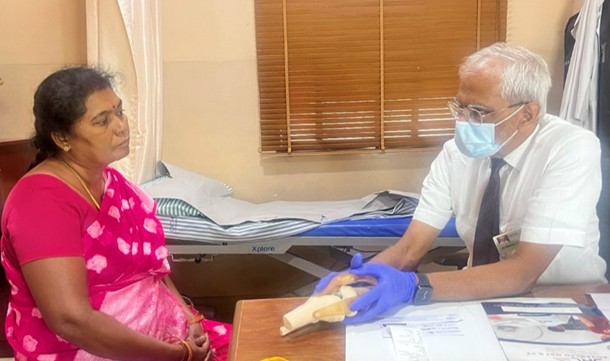
Image: Pre-operative image of the childs restricted knee movement.
A 9-year-old boy came to us with a knee that could barely move. His journey began with a distal femur fracture that was treated with immobilisation, then plating fixation when conservative management didn't work.
There was no early physiotherapy after surgery. When stiffness set in, aggressive rehabilitation was introduced too quickly. That forced rehab caused implant failure and significant internal scarring.
By the time he reached us, his knee moved between just 15° and 80°.We performed an arthroscopic arthrolysis releasing the scar tissue that had locked the joint.
The result: His range of motion improved from 15-90° to 0-110°. For a 9-year-old boy that means he can run, play and be a kid again.

Image: The patients post-surgery image.
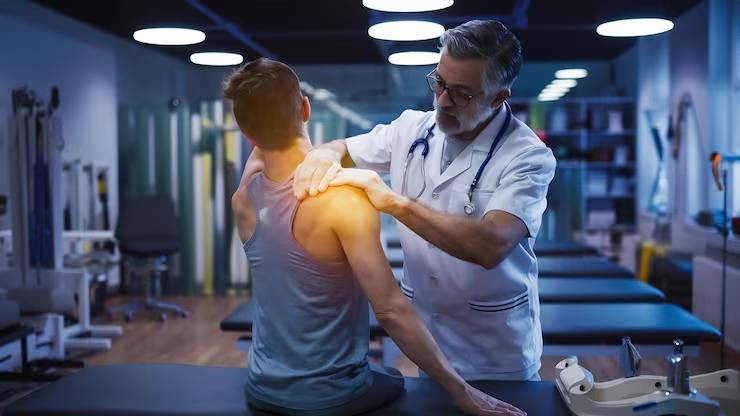
A young athlete came to us after shoulder surgery performed elsewhere. He complained of pain and functional limitation.
On detailed evaluation, we identified a missed procedure: LHB (Long Head of Biceps) subpectoral tenodesis. We performed this procedure in 2023.
The goal was to restore strength, stability and confidence in movement.
Today, the patient has returned to professional sports. In his case, the revision surgery was done to correct what was done wrong the first time around.

Image: Return-to-sport image of the patient
The anatomy of the joint is altered when it has undergone surgery. There may be scar tissue, change in bone structure or compromised tissue quality. This means that the surgeon has to work with whats already been done and not a clean slate.
At Ortho-One, we follow a simple principle: respect what has been done, and rebuild with precision. We identify the root cause, restore normal biomechanics, ensure a stable repair and plan rehabilitation from day one.
Arthroscopy at Ortho-One is not a routine procedure. Every revision case starts with a thorough evaluation and not just an MRI.
Not necessarily. Most revision surgeries are needed because of a combination of factors including biology, rehabilitation timing and biomechanics not just surgical error. At Ortho-One Orthopaedic Speciality Centre, our first step is always understanding the actual cause before we plan a revision.
Yes, it's typically more complex. Scar tissue, altered anatomy and compromised tissue quality all make revision surgery technically demanding. That's why choosing a centre with specific experience in revision procedures matters.
Recovery timelines vary based on the procedure, the patient's age and the extent of revision needed. Your orthopaedic surgeon at Ortho-One Orthopaedic Speciality Centre will give you a specific, phased rehabilitation plan after your evaluation.
Here are signs worth discussing with a specialist:
If any of these apply, a detailed evaluation at Ortho-One can tell you exactly whats happening and what your options are.
If you've had orthopaedic surgery and you're still struggling with pain, stiffness or restricted movement, you dont have to accept that as your outcome. Find an orthopaedic centre that specialises in complex revision cases and get it right the second time.
Book a consultation at Ortho-One today.
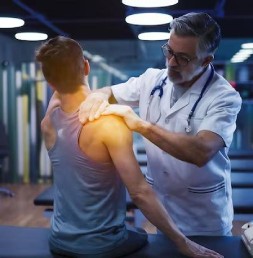
When The First Surgery Isnt Enough: Revision Surgeries At Ortho One Orthopaedic Speciality Centre

Address
Operational Hours:
10:00 AM – 7:00 PM | Monday to Saturday
Facilities
Treatments
Quick Links



 Book an appointment
 Athletes Empowerment
 Orthopaedic Education