If you're an athlete, a sports parent or a coach, an ACL injury is one of the outcomes you fear the most. It means surgery, months of rehabilitation and, in some cases, the end of a sporting career.
Research shows that female athletes are prone to two to eight times higher risk for anterior cruciate ligament (ACL) tears compared to male athletes.
A new screening model may be able to identify athletes who are at risk of an ACL injury before it happens.
Sports medicine specialists at Ortho-One Orthopaedic Speciality Centre, Coimbatore use evidence-based screening to help athletes, coaches and sports organisations to detect and manage injury risk early.
The Anterior Cruciate Ligament (ACL) is one of the four ligaments inside the knee. It connects the thigh bone to the shin bone and keeps the knee stable during movement.
ACL injuries are common in sports that involve sudden changes of direction, jumping and landing. Most ACL tears happen without any contact from another player; they happen because of how the athlete moves.
ACL injuries are most common in football, basketball, volleyball, badminton and handball. These sports all involve rapid direction changes, jumping and landing at high speed.
Recovery from an ACL tear typically requires surgery followed by 6 to 12 months of rehabilitation. It also depends on if the meniscus has been repaired. That's why preventing the injury in the first place matters so much.
Most teams rely on a single test to assess injury risk. But ACL injuries are caused by multiple factors including poor movement patterns, muscle imbalances and reduced balance control. For athletes the causes could be a lack of warm-up and conditioning. One test can't catch all of them.
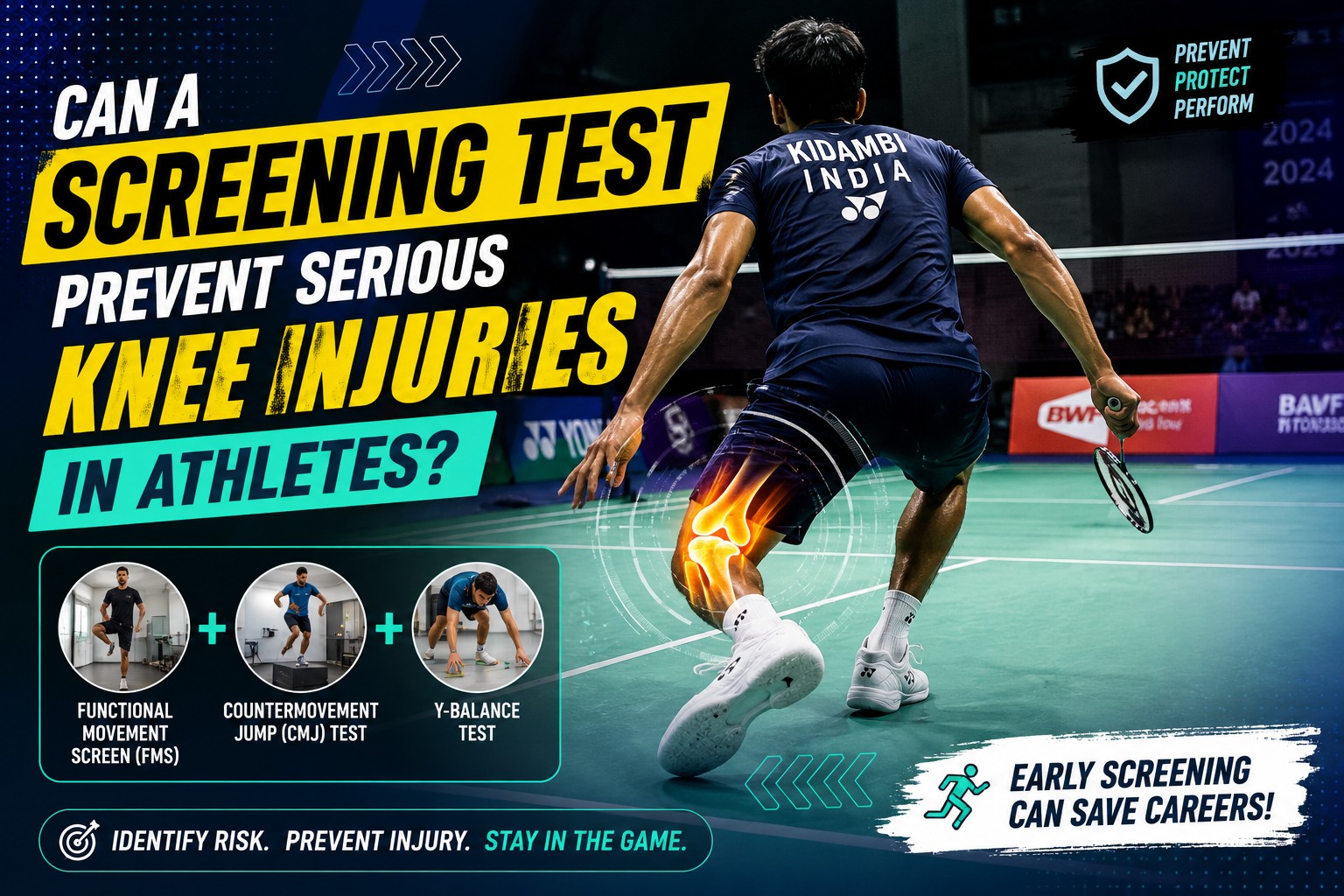
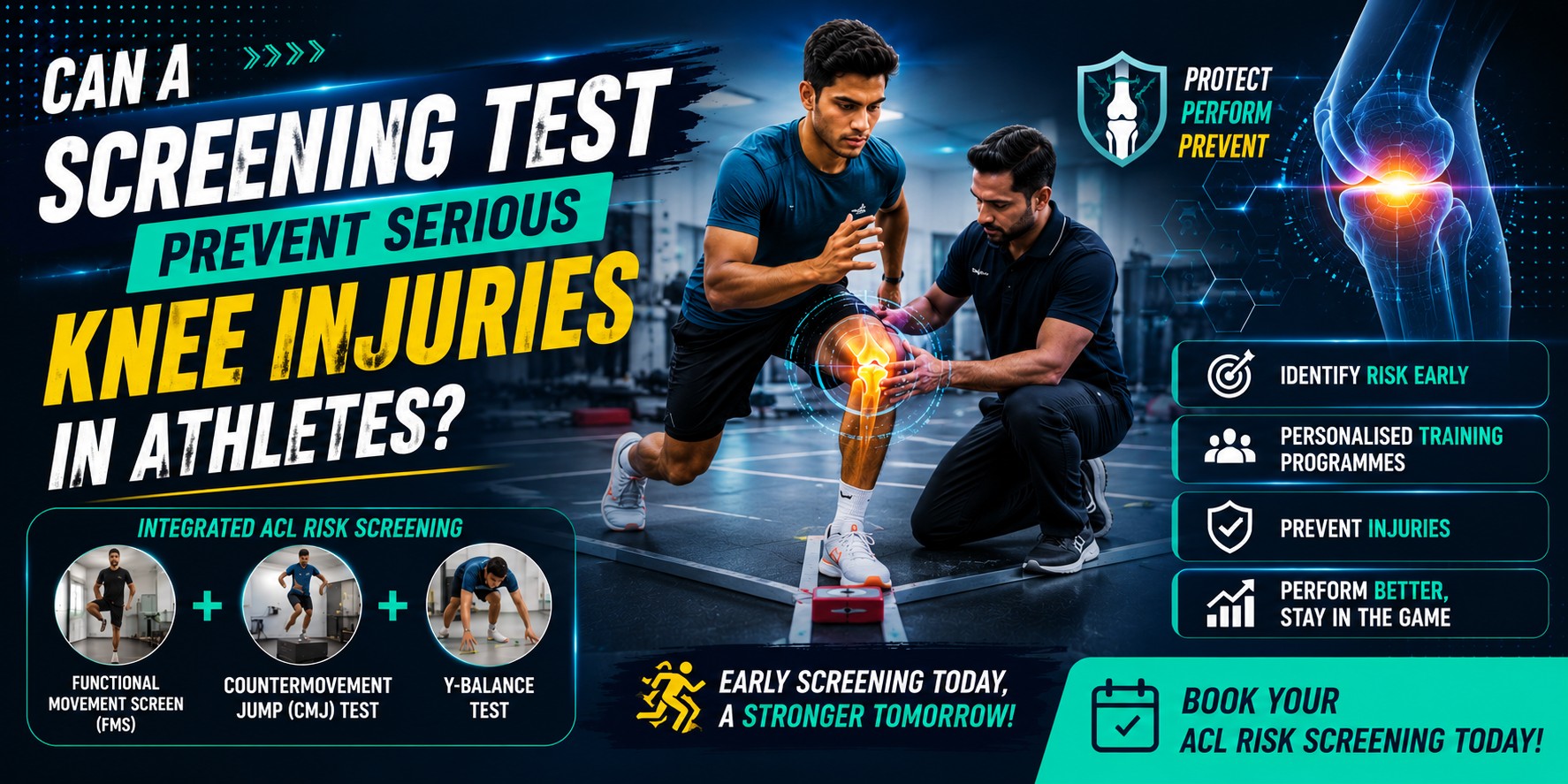
The new integrated model combines three tests:
Functional Movement Screen (FMS) - to assess movement quality
Countermovement Jump (CMJ) Test - to measure explosive power and leg symmetry
Y-Balance Test - to evaluate balance and stability
When these three tests are used together, they predict ACL injury risk far more accurately than any one test on its own.
The FMS checks how well an athlete performs basic movements like squatting, lunging and stepping. Poor movement patterns put extra stress on the knee during sport and increase the risk of injury.
The CMJ test measures explosive power and detects differences between the left and right legs. If one leg is weaker than the other, the risk of an ACL injury increases as the weaker leg is forced to absorb more load than it can handle.
The CMJ test is also conducted after the ACL reconstruction surgery to assess if and when an athlete is ready to return to training.
The Y-Balance Test checks how well an athlete can balance on one leg while reaching in three directions. Poor balance is one of the main reasons athletes land badly and bad landings are where most non-contact ACL tears happen.
Athletes who suffered ACL injuries later in the season had shown warning signs at their pre-season screening.
• Low scores on the Functional Movement Screen
• A significant strength difference between the left and right leg on the CMJ test
• Poor balance scores on the Y-Balance Test
Athletes who showed problems in all three areas had a much higher risk of suffering a non-contact ACL injury. The combined model was more accurate than any test used on its own.
Early screening gives coaches and physiotherapists time to act. Once an athlete's risk profile is known, a targeted training programme can be designed to address the specific weaknesses found.
| Training Type | What Does It Address? |
|---|---|
| Landing mechanics training | Teaches athletes to land with correct knee-hip alignment, reducing the inward knee collapse that causes most ACL tears |
| Single-leg strength training | Corrects the power difference between legs |
| Balance and proprioception training | Improves single-leg stability and the body's ability to sense joint position |
| Functional movement correction | Fixes the faulty squat, lunge and step patterns identified on the FMS |
| Core and hip strengthening | Reduces the load placed on the knee during explosive movements |
Ideally, 6 to 8 weeks before the competitive season starts. This gives enough time to address any weaknesses found before full match exposure begins. Annual screening is recommended even for athletes with no history of injury.
Integrated neuromuscular screening is recommended for:
| Who | Why |
|---|---|
| School and college athletes in Coimbatore | Football, basketball, badminton and volleyball players face the highest risk during growth years |
| Athletes returning from a previous injury | Prior lower limb injury significantly increases the risk of re-injury |
| Female athletes | Research consistently shows female athletes face a higher ACL injury risk than male athletes in comparable sports |
| Athletes aged 15 to 25 | Growth and physical development create the greatest period of vulnerability during these years |
| Sports teams and academies | Preseason screening across a squad identifies which players need targeted prevention programmes |

Not completely. But research shows that the right neuromuscular training programme can reduce the incidence of non-contact ACL injuries by 50% or more. Screening early and acting on the results makes a significant difference.
A full integrated screening covering the FMS, CMJ and Y-Balance Test takes between 45 and 90 minutes. After the assessment, a sports physiotherapist will review the results and provide a personalised risk report and training plan.
Yes! The centre offers comprehensive sports injury screenings for movement, strength and balance. We offer prevention, surgery and rehabilitation under one roof.
A contact ACL injury happens when the knee is struck directly. For example, during a tackle. A non-contact ACL injury happens without any direct impact, usually when the athlete plants their foot, decelerates quickly or pivots at speed. Non-contact tears are the most common type and the main focus of prevention programmes.
You are at risk for an ACL injury if:
A. You've had a lower limb injury that wasn't rehabilitated fully.
B. Your knees cave inward when you squat, land or change direction.
C. You struggle to balance well on one leg.
D. You feel your legs perform differently during quick and sudden movements.
E. You are a female athlete and your physique is more vulnerable for an injury.
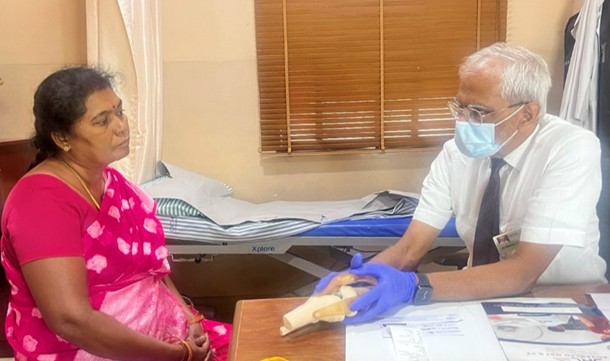
A physiotherapist at Ortho-One can carry out a full assessment and tell you if you are at risk for an ACL injury.
If you're an athlete, a sports parent or a coach, don't wait for an injury before taking action. Assess the risks and build a prevention plan along with the team at Ortho-One Orthopaedic Speciality Centre, Coimbatore.
Book a sports medicine consultation today.
When The First Surgery Isnt Enough: Revision Surgeries At Ortho One Orthopaedic Speciality Centre

Address
Operational Hours:
10:00 AM – 7:00 PM | Monday to Saturday
Facilities
Treatments
Quick Links



 Book an appointment
 Athletes Empowerment
 Orthopaedic Education