Sonologist shoulder pain guide: For when every shoulder scan hurts
75.8% of sonographers experience musculoskeletal pain and 60% of the pain affects shoulders. A 2024 meta-analysis of 13,000+ practitioners confirmed that sonography ranks among highest-risk professions for work-related Shoulder Injuries.

Why do sonologists develop shoulder pain?
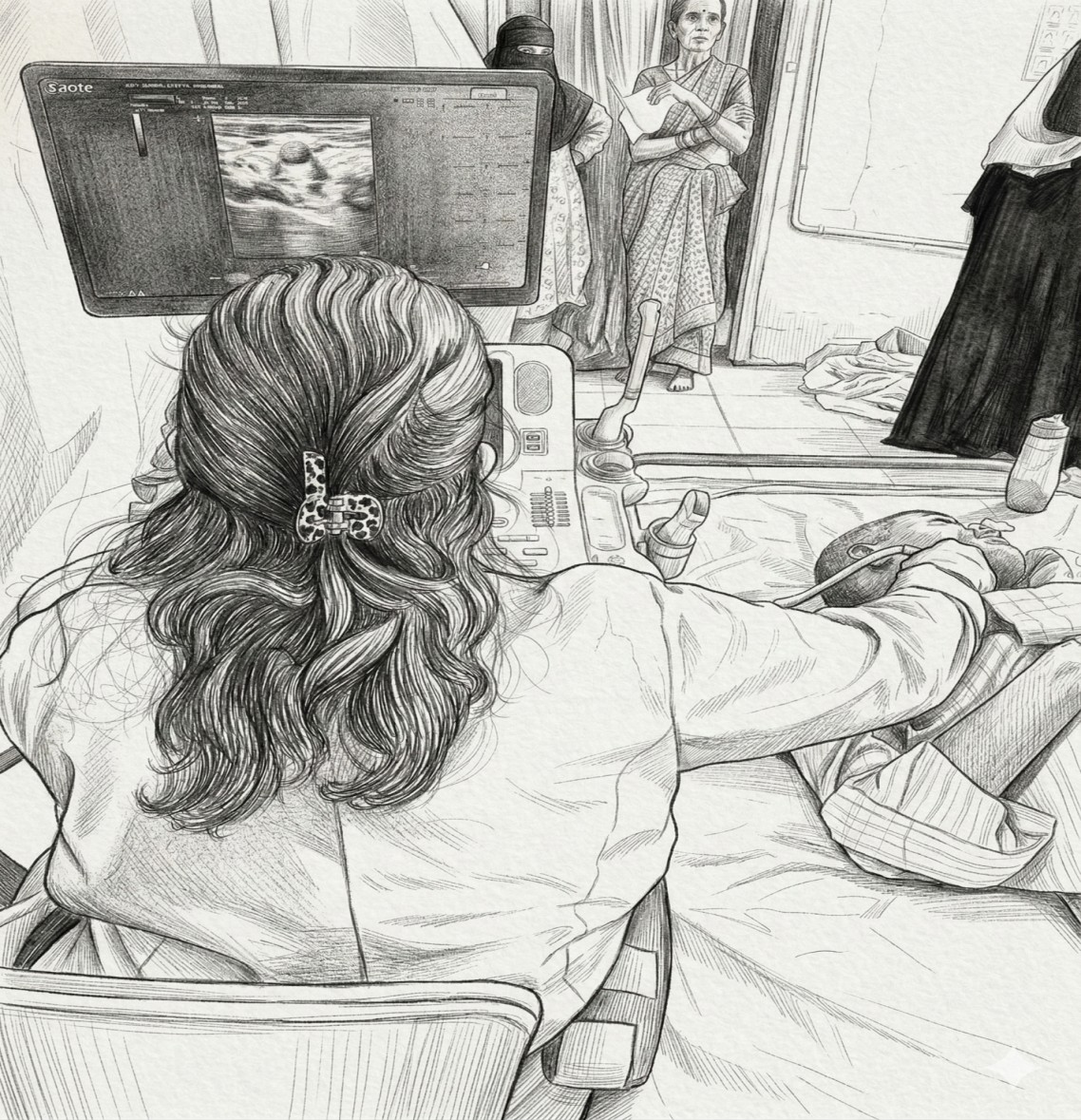
Sonography demands holding the arm high for hours, pressing hard with the probe and staying frozen in a position that reduces blood flow to shoulder muscles.
Most common shoulder injuries
● Supraspinatus tendinopathy (most common)
● Subacromial bursitis
● Bicipital tenosynovitis
As we age, shoulder tendons become weaker and get less blood flow making sonologists get injured faster during scans.

3 reasons why sonologists get shoulder pain
| Mechanism | Scan Trigger | Force Generated |
| Arm Abduction (arm is elevated) | Reaching across patient | 90°+ shoulder strain |
| Probe Pressure (heavy pressing) | Obese patients | Normal scans - 4kg pressure → difficult patients - 20kg force |
| Static Posture (no movement) | 4+ hour shifts | Muscle ischemia (Muscles are starved) |
High-volume scanning of more than 4hrs a day triples injury risk.
What are the top risk factors for sonologists?
● Ergonomic: The couch may be too far, and the monitor height not placed ideally.
● Grip: Pinch grip vs palmar grip. A pinch grip uses the tips of the fingers and thumb for precision offering low power. A palmar grip wraps all fingers around the object for strength and stability.
● Volume: Scanning daily for over 4 hours
● Personal: women sonologists with a higher BMI and low scapular strength are higher at risk for shoulder pain
Alt text: Sonographer pinch grip vs palmar grip ultrasound scanning

The 30° prevention rule
Here are sonographer ergonomics that can prevent shoulder pain in sonologists.
1. Reduce shoulder elevation by <30° immediately.
2. Fix the equipment
- Get height adjustable chairs and consoles for a neutral shoulder.
- Get forearm and elbow supports to reduce muscle activity by 30-50%.
- Get monitors placed at eye-level to prevent neck compensation.
3. Change your technique
- Use the palmar grip by using all your fingers and the palm, with light pressure, while holding the instrument.
- Use ambidextrous scanning by alternating hands during the scans.
- Take micro-breaks and rest the working forearm after each measurement.

Shoulder strengthening exercises for sonographers.
(PAA: "sonographer exercises")
Here are some sonographer exercises that can prevent 80% of all injuries.
Try this daily 5-minute exercise routine
1. Scapular retraction (band rows) - 3x15
2. External rotation (side-lying) - 3x12
3. Dynamic warm-up (arm circles) - 2x20
[Image 5: Scapular stabilization exercises]
Alt text: Sonologist scapular stabilization exercises band rows
When to seek help for shoulder pain?
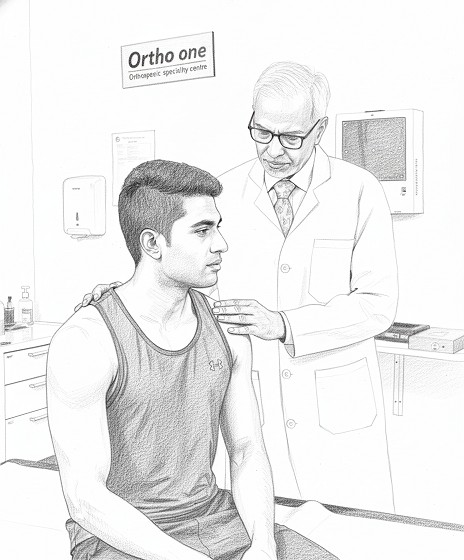
Get an immediate orthopaedic consultation when you notice these red flags.
- You have pain at night for more than 2 weeks.
- You are unable to hold the probe anymore
- The pain is affecting the quality of the scan.
An early intervention prevents frozen shoulder or adhesive capsulitis.

Key takeaway for sonologists
Shoulder pain doesn’t have to end your career. Implement the 30° rule and use the palmar grip to reduce the risk of injury by 60%. At Ortho-One Orthopaedic Speciality Centre, Coimbatore specialists help sonographers with musculoskeletal disorders.

Bridging A Critical Gap In Para Sports : Para-athlete Strength And Mobility Assessment In Coimbatore

Address
Operational Hours:
10:00 AM – 7:00 PM | Monday to Saturday
Facilities
Treatments
Quick Links



 Book an appointment
 Athletes Empowerment
 Orthopaedic Education