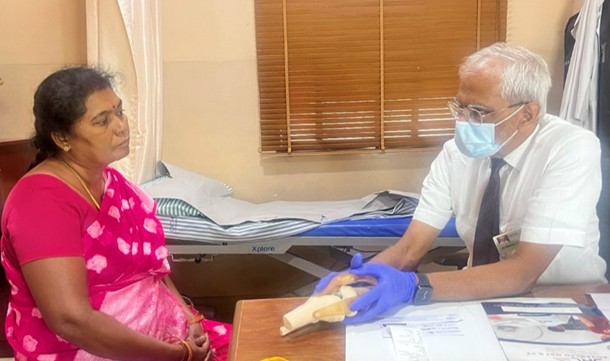
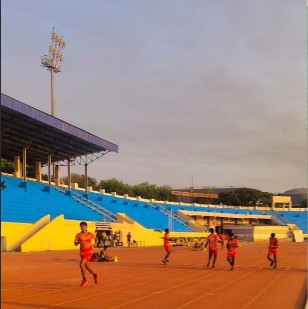
As Coimbatore's premier orthopaedic specialty centre, Ortho-One offers comprehensive care for musculoskeletal conditions and sports injuries. Ranked as the best orthopaedic specialty centre in Coimbatore, our team of renowned Orthopaedic Specialists, Sports Medicine and Physiotherapists provide personalized treatment using pioneering techniques and state-of-the-art facilities.
At Ortho-One, we're dedicated to restoring mobility and rebuilding lives. Our expert team provides compassionate and specialized orthopaedic care, thereby restoring movement and enhancing lifestyle.


DR. DAVID V RAJAN
ARTHROSCOPY, KNEE AND SHOULDER SURGERY
Exclusive arthroscopic surgeon
Pioneer and promoter of arthroscopy in India.
Head of faculty at Ortho-One, Coimbatore.
Graduate of Christian Medical College, Vellore.
Post-graduate in orthopaedics from Madras Medical College.
Traveled extensively to gain expertise in arthroscopic surgery.
Held various prestigious positions, including President of the Indian Arthroscopy Society.


DR. K. SANTOSH SAHANAND
KNEE SURGERY, SPORTS MEDICINE AND CARTILAGE RECONSTRUCTION
Graduate from Madras Medical College, Chennai.
Masters in orthopaedics from Kasturba Medical College, Manipal.
Underwent further training in Christian Medical College, Vellore.
Specialized in arthroscopy and sports medicine.
Trained in ISAKOS Fellowship under Dr. David V. Rajan.
Fellowships in sports science and orthopaedic rehab.


DR. R. SREERAMALINGAM
SPINE SURGERY, MINIMALLY INVASIVE SPINE SURGERY, SPINE SCOLIOSIS, ENDOSCOPIC SPINE SURGERY
Dr R. Sreeramalingam completed his MS (Ortho) from Armed Forces Medical College (AFMC) Pune and began his spine practice in 2005. After a one-year fellowship in Spine Surgery, followed by FNB Spine Surgery (2 years) under the National Board of Examination, New Delhi, he was chosen for the prestigious President’s Fellowship Program by the British Spine Society in 2014. Before joining Ortho-One, he was working at Park Neuroscience Centre in Kolkata...


DR. M. SHYAM SUNDAR
SHOULDER & ELBOW SURGERY AND JOINT REPLACEMENT
Trained under renowned surgeons: Dr. K Vinodh, Dr. David V Rajan, Prof. Jae Chul Yoo, and Dr. Jonathan Austin Herald.
Consultant Shoulder, Elbow, and Knee Surgeon at Ortho-One Orthopaedic Speciality Centre, Coimbatore.
Experienced in minimally invasive surgeries of shoulder, elbow, knee, and ankle joints.
Skilled in knee arthroscopic surgery, shoulder joint replacement, and elbow arthroscopy surgeries


DR. B. VIDYA SAGAR
FOOT & ANKLE SURGERY, DEFORMITY CORRECTION AND PAEDIATRIC ORTHOPAEDICS
Graduated from Andhra Medical College and King George Hospital, Visakhapatnam
Diploma and Master's in Orthopaedics and Traumatology from Christian Medical College and Hospital, Vellore
Dip NB in Orthopaedics from the National Board
Fellowship in arthroplasty and advanced trauma from Universitat Klinikum, Jena, Germany
Fellowship in Foot and ankle surgery from Schulthess Klinik, Zurich, Switzerland


DR. YUVARAJAN PALANISAMY
JOINT REPLACEMENT, HIP & KNEE RECONSTRUCTION AND REPLACEMENT SURGERY, HIP PRESERVATION
M.S. ORTHO* (May 2010) from Maulana Azad Medical College, New Delhi.
DNB ORTHO* (Sep 2012).
Associate Editor of JAJS/IJO Reviewer.
Traveling Fellow in Arthroscopy & Arthroplasty* at Adelaide, Australia (2013).
Observer in Arthroscopy and Sports Medicine* at Ortho-One, Coimbatore (2015).
ISKSAA Travelling Fellow in Upper Limb Unit* at Wrightington Hospital, Manchester, UK (2016).


DR. N. JERRY
TRAUMA AND ORTHOPAEDIC ONCOLOGY
Graduated from Tirunelveli Medical College
Diploma and Master's from Christian Medical College, Vellore
Foot and ankle fellowship from Indian Spinal Injuries Centre, Delhi
PG Healthcare Administration from Loyola Institute of Business Administration
Consultant Orthopaedic Trauma and Orthopaedic Oncology surgeon at Ortho-One Speciality Centre


DR. MANIKANDAN THANDAPANI
SPINE SURGERY
Graduate from Thoothukudi Medical College.
Master in orthopaedics from Madras Medical College.
Fellowship in National Board Spine Surgery from SAKRA WORLD Hospital, Bangalore.
Active member in ASSI.
Specialties include:
Minimally invasive surgery.
Deformity Correction.
Endoscopic Spine surgery.


DR. NALANDA
HIP AND KNEE JOINT REPLACEMENT, TRAUMA
Dr.Nalanda completed his MBBS from Government institute of medical sciences, Karnataka, Hubli in 2007 and then MS Orthopaedics from Stanley Medical College, Chennai, in 2013. He then underwent training and Fellowship in Arthroplasty at Sunshine hospital, Hyderabad, in 2015. Later on he has worked at MMHRC, Madurai, a high volume tertiary referral center, gaining immense experience in complex trauma, arthroplasty and spine surgery.


DR. SHASHIDHAR NARRA
SPINE SURGERY
Orthopaedic Surgeons Society of Andhra Pradesh Conference (OSSAPCON) 2019, Paper: Multiple Fractures in a 4-year-old child Managed with TENS.
INDIAN ORTHOPAEDIC ASSOCIATION CONFERENCE (IOACON) 2022, MEDAL PAPER: Outcomes of Ossified Ligmentum Flavum Excision by a Newer Technique- Can these bring down the Intra-operative Complications?


DR. S. JAYENDRA
KNEE SURGERY
MBBS
Diploma in Orthopaedics (Amrita Institute of Medical Sciences, Kochi)
DNB Orthopaedics (Apollo Hospital, Chennai)
Fellowship trained under Prof. Dr. David V. Rajan
Observership under Dr. Dinshaw Pardiwala
Fellowship under Dr. Robert Laprade (USA), a world-renowned knee surgeon
10 years of experience in Orthopaedics


DR. EMIL CYRIL
SPORTS MEDICINE
Graduate from Wayanad Institute of Medical Sciences, meppadi, wayanad.
Masters in sports medicine from Netaji Subash National Institute of Sports, Patiala.
Specialised in sports injury management, sports fitness assessment, periodized training program prescription, and exercise prescription for diabetes and hypertension patients.
Wada antidoping certificate course.
Certificate courses in strength and conditioning for the Indian population, as well as sports and performance nutrition.

Single Specialty Hospital of the year - Below 100 beds West Zone

We are honoured to recieve the smart hospital award "Ortho Excellence" at Hospex Healthcare Expo 2025 - Kochi, Kerala.

ET Healthworld Healthcare Awards 2025

Celebrating trust and excellence ortho-one honoured by Star Health Award - 2024

Ortho-One Awarded Best Single Specialty Hospital In West Zone, Tamilnadu

Trailblazers of Kongu award - 2024.

The Prestigious Dr. P. Suryanarayan Gold medal for Arthroplasty won by Dr P Yuvarajan and Dr Sugumar team at the TNOACON 2023 Chennai. Teamwork paid off.

TNOA Prof. Ramanathan Gold medal for Consultants won by Dr. Shyam at the TNOACON 2020 Vellore.

TNOA Prof. Ramanathan Gold medal for Consultants won by Dr. P. Yuvarajan at the TNOACON 2022 Trichy.

Dr. David V. Rajan, receiving the Life Time achievement award at the 19th Annual Conference of Indian Arthroscopy Society, Coimbatore 2022.

Times Business Award – Excellence in Orthopaedics - 2024.

Best Ortho Hospital in Coimbatore - 2024
High-level scientific research is of paramount importance to Ortho-One, as it significantly enhances our understanding of orthopaedic care. By staying at the forefront of medical advancements, we ensure that our treatments are informed by the latest evidence-based practices. This commitment to research not only improves patient outcomes but also drives innovation in our specialized services.


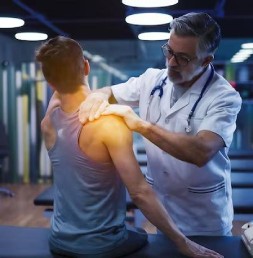
When The First Surgery Isnt Enough: Revision Surgeries At Ortho One Orthopaedic Speciality Centre


Address
Operational Hours:
10:00 AM – 7:00 PM | Monday to Saturday
Facilities
Treatments
Quick Links


 Book an appointment
 Athletes Empowerment
 Orthopaedic Education